When deliberately non-Jewish read turns into a “duh, of course this has relevance. Oh damn, I am thinking about my blog more than I thought.”

So as I mentioned previously, I am planning to review Maggie Anton’s Rav Hisda’s series next. However, I still haven’t had a chance to actually start reading the book because I had been heads deep in a book not particularly related to the purpose of this blog. My reading agenda is generally pretty varied. I’ve mentally committed to reading at least one blog related book per month leaving myself wide open to other books to keep my imagination flexible and free. Never one to shy away from most genres, I like to add a good dose of non-fiction at least once a month. So I’ve been reading about Queen Isabella of Castile (as seen below). 61bF4iN67BL__SL500_AA300_PIaudible,BottomRight,13,73_AA300_

Here I was merely travelling through Renaissance Spain and thinking to myself, oh man, I can’t wait until I get through this and get back to my blog. Can’t wait to jump into 7th century Babylon! And then of course I remembered who I was reading about. Queen Isabella, the subject of my current book, is of course of the Queen of Spain who orchestrated the expulsion of Jews from Spain, the one who started the Spanish Inquisition, the queen in whose glorious name the Americas were discovered by Columbus. Seems I can’t escape from my blog even when I think I’ve escaped. My own family is Ashkenazi so I guess I’ve always viewed the sufferings of Sephardim (Jews from Iberia – Spain and Portugal) in kind of an abstract. Sure it sucks to have been kicked out of your homes but MY family had to deal with pogroms and Cossacks! Except, obviously I had no idea what I was talking about. We are all one people with same experiences that just happened to take place in variety of points on the globe.

So Isabella. Yeah. What a huge historical figure. She rises to the top against all odds after the death of her brother and manages to seize the throne from her brother’s daughter (who may not have been his anyway) while managing to marry against his wishes to the king next door Ferdinand of Aragon and forming the Ferdinand and Isabella TEAM. Together they conquer Granada, the last remaining Muslim stronghold in Spain. They expand their territory to Caribbean with the discovery of the New World. And they rid their lands of the infidels. By giving them a choice of forcible conversion or expulsion from lands where they’ve lived and prospered for hundreds of years. A real group of mensches. To my surprise, Isabella turned out to be the driving force of the two. It was she in her “admirable” religious zeal that insisted on cleansing her lands of non-believers after spending her childhood and adulthood in close contact and faithful counsel with Castilian Jews.  It was she that allowed the Inquisition to seize, question, and burn to the point of where the zeal of her Inquisition was criticized by the Pope. It was she that promised to the Jews in her own lands and then Jews and Muslims in her newly conquered Granada that they would be allowed to practice their religion in peace as long as they submitted to being treated like second class citizens, and then reneged on her promises within a few years and gave them the awesome choice of conversion of expulsion. She is responsible for deaths of thousands of those who chose to leave and were then abused, robbed and killed by Christian captains that were paid by the crown to give them safe conduct. And even when the Jews converted sincerely or otherwise, her Inquisition frequently stormed in and prosecuted them for being fake, regardless of whether this was true.

So here they are in all their glory. And the irony of her being positioned above him is not at all lost on me.

en-ferdinand-and-isabella

Leave a comment

Filed under Personal Reflections

Missing my reviews.

I’m starting to miss blogging. I can’t believe it already but my little heart desperately wants to go off to the world about the weird little bits of Jewish knowledge I am gleaning. Look to later this week for a mid read thoughts post. With a three day weekend, I should have time!

Leave a comment

Filed under Midread thoughts

Next up “Apprentice: A Novel of Love, the Talmud, and Sorcery (Rav Hisda’s Daughter, #1)

This is what I have planned for the blog next. I read “Rashi’s Daughters” series a few years ago and really enjoyed it so when i found out about this series i knew i had to give it a shot. This is history of my people  we are talking here, the time of the birth of Talmud. What fun to come! Who is excited? And maybe after, I re-read “Rashi’s Daughters” and jump forward in time?

Check out this book on Goodreads: Apprentice: A Novel of Love, the Talmud, and Sorcery (Rav Hisda’s Daughter, #1) http://www.goodreads.com/book/show/13542525-apprentice

Leave a comment

Filed under Coming Next

From one of my most favorite authors around. ♡

This is why I believe variety is kind of godly.

Leave a comment

Filed under Midread thoughts

With a few reviews under my belt

Now that I’ve reviewed three books (wow, I guess I can commit if I really, really try!), I have a bit of a perspective on how I’ve been doing. This is what I’ve picked up on thus far

Pros

  • I’ve gotten to touch on pretty varied material in three books: religion and modern life, personal history, and biblical fiction.
  • I’ve traveled to ancient times, the middle ages and modern day US.
  • I have read both fiction and non fiction
  • I had a chance to ask myself some pretty important questions
  • I am enjoying reading with a critical eye and am skimming less than I normally do when reading
  • I am actually retaining the information that I am reading about much more so than before

Cons

  • I had a really hard time taking notes and keeping track of my thoughts
  • I didn’t always care for the choices of what authors included or didn’t include in the work
  • I am still struggling with the format of the blog
  • I am not quite sure what works and what doesn’t
  • I am still a bit intimidated at the scope of this blog that I am taking on

1 Comment

Filed under Personal Reflections

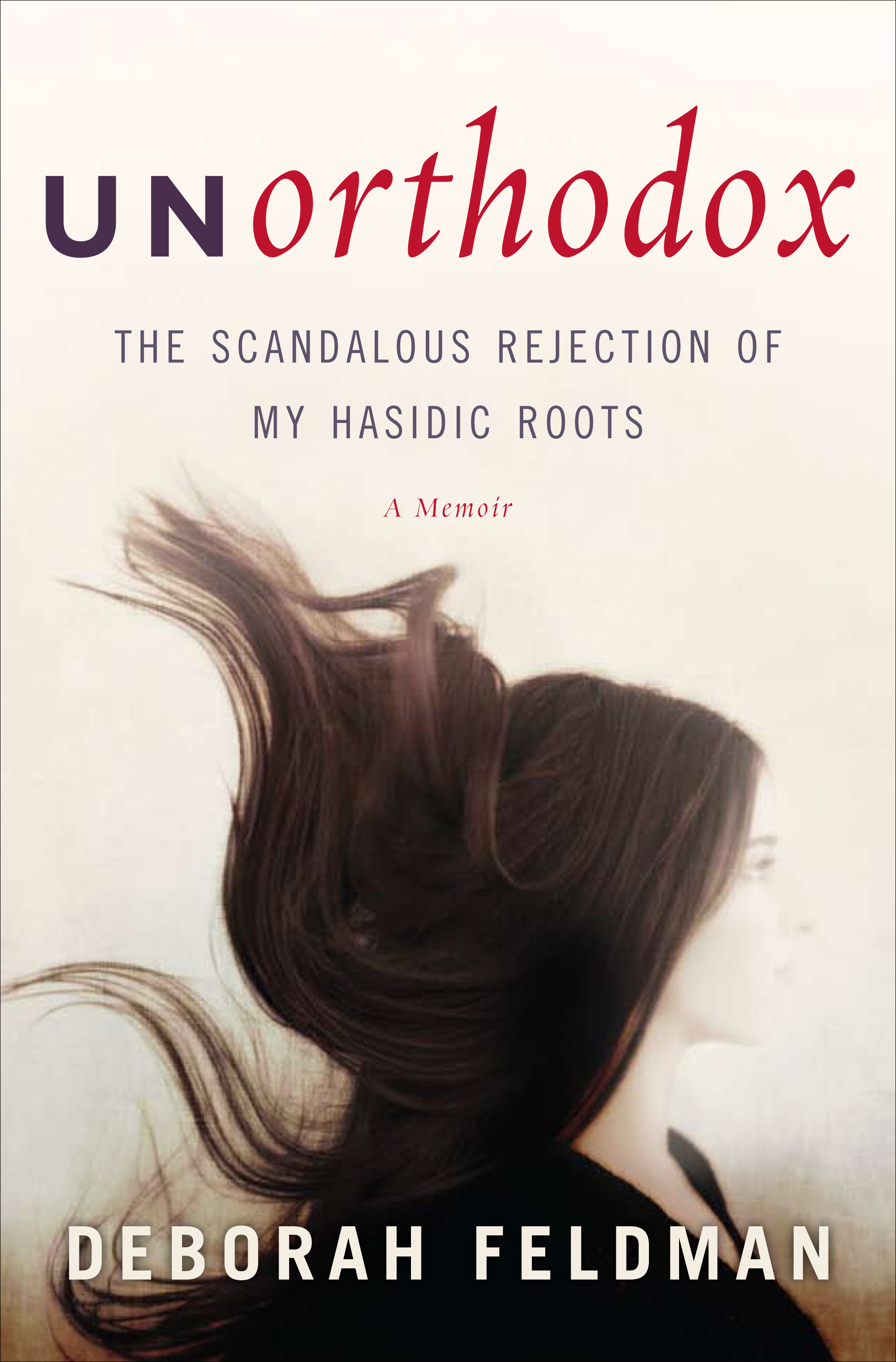
Review of Deborah Feldman’s “Unorthodox: The Scandalous Rejection of My Hasidic Roots.”

dedorah-feldman-unorthodox

I didn’t have to labor through Unorthodox but my mind rebelled greatly against dropping it practically every time some example of what I perceived as backwardness reared its head. And it happened A LOT. There are so many points in the memoir that were heartbreaking. So many times when I felt claustrophobic. Many times when I cringed and hugged myself. And so many times that I thanked my lucky stars to have been born where I was. And this is coming from someone born in Soviet Ukraine with its open policy of religious and ethnic repression.

Unorthodox is the memoir of Deborah Feldman’s life and subsequent breaking away from the Satmar Hasidic community in New York. A daughter of a mentally ill father (whose specific illness is never clear) and a mother who left the community, Feldman is raised by her deeply religious grandparents, both European Holocaust survivors. The Satmar community they live in Williamsburg is a deeply Hasidic community of followers of the charismatic Rebbe of Satmar ( a Hungarian city of Satu Mare). Feldman lives the life of a typical Satmar girl: learning to cook with her grandmother and fearing to disappoint her grandfather, going to school to learn what is expected of a good Jewish woman, and dreaming about getting married and becoming independent. But her life is not enough because Feldman never feels she be song’s whether because her parents are not really around or because she simply wants more. Even as she goes through the steps expected of her in agreeing to a match with a man she barely knows, Feldman doubts what her true path should be. Instead of rooting her in her community, the failure of her marriage breaks her further away until she eventually leaves her community behind.

Feldman invited a hell of a lot criticism with her book. After if I finished reading, I decided to take a gander online to find out a bit more about Feldman. There are websites out there literally devoted to denouncing her for the lies about the community. Her parents’ divorce documents are shown, her childhood photos are touted and he friends decry that she never indicated she was unhappy and that she had dramatized her life and blackened her religion and painted them as backward monsters, fundamentalists and criminals. Is it true? Feldman only knows, and I found her story compelling and too many things about it rang too true to be lies. But take a read and judge for yourself.

These are some of the things I learned about the Satmar from Feldman’s book :

  1. They do not much care for the English language, spoken or written and they actually forbid the reading of all materials they perceive as secular
  2. Satmar women shave their heads fully unlike their Orthodox sisters. Wearing human hair wigs is also frowned upon.
  3. Satmar education offers bare minimum of US educational curriculum requirements. Meaning they do not even offer the equivalent of a high school diploma.
  4. Matchmaking for the Satmar begins in their teens and an unmarried man or woman beyond the age of 20 is considered somewhat of an embarrassment. Also, until the oldest child is married, it is not considered proper for the younger siblings to marry.
  5. On average, two weeks of every month Satmar women spend “unclean” and their men are forbidden from touching them. I don’t need to get graphic but let it suffice to be said, that they have to show proof of their cleanliness to a rabbi if they are not positive they are ready to be touched.
  6. Satmar community has zero sex education. Women are discouraged from exploring their bodies. Men apparently turn to each other to get off and very often the newly wed do not have any idea how to consummate their marriage with the least worrisome side effect being prolonged non-consummation to the most worrisome need for an ER visit.
  7. Abuse of all varieties is tolerated, from coping feels in the ritual mikvah (ritual cleansing bath) to child abuse.
  8. Satmar follow their own laws, from having their own ambulances to their own police, and don’t seem to find the need to adhere to the law of the land.
  9. Any Jew who is not a Satmar, is not considered a Jew. We are all gentiles if we are not Satmar, even if we simply stopped following their rules.

Leave a comment

Filed under Reviews

Review

Coming soon.

Leave a comment

Filed under Uncategorized

Mid-read thoughts on Unorthodox

Reading about the Satmar Hasidic community of  Williamsburg, NY is bringing up all sorts of emotions in me right now. Distaste, surprise, worry, apprehension, pity, anger and any number of SAT prep words I didn’t learn until college. Incidentally? College was not an option for Deborah Feldman. Neither was reading English books. Or speaking English. Or associating with English speakers who have no souls. Or. Or. Or.

The list of don’ts has been blowing my mind. Me who considers herself such an expert on the Orthodox community. That “expert opinion” comes from the couple of dozen visits to my brother’s community in Ocean County, NJ and Philadelphia. “You know nothing, Eugenia” are the words that are coming to mind. In comparison, my brother’s brand of Judaism might as well cast him as a non Jew with the Satmar. He has technology in his house. His wife does not shave her head. Their children will have a valid high school diploma. They may choose to go to college. They speak better English than Hebrew and they don’t wish the state of Israel to perish.

I know nothing.

Leave a comment

Filed under Midread thoughts

Next up

I jump into modern times. You like how I jump around between time periods? I saw the sequel to this at my local library (two blocks from my work) and knew I had to read #1. So stay tuned, my readers for

image

Leave a comment

Filed under Uncategorized

Leaving the tent

My version of the book

Most people have forgotten her name. Only those that have read the Bible, know her story, the little of it that the authors of the Torah deign to tell us about. Dinah, the sole daughter of Jacob-Israel, the father of the twelve tribes of Israel, aka Jews, merits a mention of her name twice in Vayishlach chapter of Genesis. She is mentioned only when she is born and when she becomes the cause for the slaughter of the males of Shechem. Dinah  is abducted and defiled by the prince Shechem who then wants to marry her. Her father will only allow this after the prince and all the males of his city submit to circumcision. When they all do and are laying wounded in their homes,  two of the sons of Jacob with their men descend upon the city and kill all the men and loot the city. They then take Dinah from the palace and leave the city. We have no idea what happens to Dinah after this happens. Her name is never mentioned again. So in the entire “story” of Dinah, she is not even an active player. She is essentially a name drop.

In “The Red Tent”, Dinah is a real person. From the first lines of the book, you get the full sense of her as a real human being, not as a character in someone’s book, but a real, living, breathing woman. Though the book starts similarly toned to the Bible, by telling a story of her family, Dinah tells us the story of the women in her family, the story that the readers of the Bible really don’t ever hear. She first tells us the stories of her mothers’ youths: both her birth mother Leah the Earth Mother, and her sister-wives, Rachel the Beautiful, Zilpah the Witch, and Bilhah the Kind. Men are incidental to the story of Dinah’s mothers and her own childhood. They are there, you know their names but they are not active participants. In the red tent, where all the women of her childhood go to congregate in sisterhood during their times of the month, Dinah grows up with the stories of goddesses populating her mothers’ worlds, the goddesses governing everything from childbirth to puberty. She grows up to know that being a woman means to be strong and skillful, that it means to be open to all possibilities and gifts of the world. As she learns about herself, she learns to love being a midwife and it is this love that brings her to her prince, Shalem when she assists Rachel with a birth that takes place in the palace. As they fall in love at first sight, they lose all sense of caution and the die is cast. When Dinah’s brothers take her out of the city covered in the blood of her beloved husband, she curses her brothers and her father and disappears from their history forever. Dinah ends up in Egypt and lives an entirely different chapter of her life eventually coming back full circle to the curse that she placed on her family.

It’s needless to say that I loved this book as desperately the second time I read it as a 32 year old woman. I may have seen Dinah the impulsive teenager in a less romantic light, but I also saw and appreciated Dinah the woman in Egypt. This story is not a fanciful imagination of a feminist author. The Red Tent is Dinah’s opportunity to speak in her own voice. She is confident, unencumbered by worries of inferiority and social class. She is a woman who is a strong woman because she is raised by such women. She sees visions like her brother Joseph and feels the presence of her gods, she makes her own choices, she heals and helps bring new life in the world. She loves with her entire being and shares herself completely. She is a full kaleidoscope of a human and you root with her even as you cringe with the steps she takes and smile when she is finally happy. She comes into her own in her own time, on her own terms, and when she is fully ready. In Dinah I find a complete woman, someone who I would love to have met in my own life.

Leave a comment

Filed under Reviews